
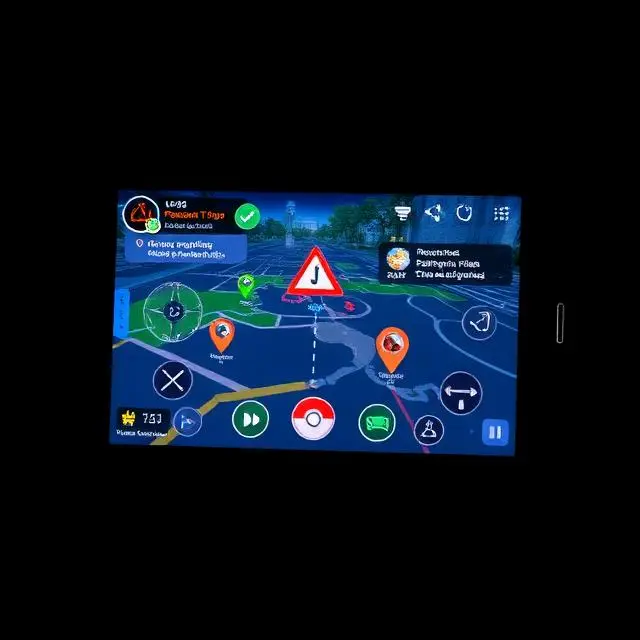
I Almost Made a Mistake. Here’s What Stopped Me.
It was a Tuesday night. My phone was plugged in, Pokémon GO was open, and I was staring at the map. The nearest PokéStop was a 20-minute walk away. Rain outside. Work in the morning.
My buddy had texted me earlier that day. “Bro, I caught a Heracross. From my bedroom.” Heracross. A region-exclusive Pokémon that doesn’t even spawn on my continent.
I asked him how. He sent me a name: PGSharp.
I spent the next two hours reading everything I could find about it. Some of what I found was helpful. A lot of it was either pure promotion or pure paranoia. Neither felt honest.
So this is the article I wish existed that night. Real. Balanced. No hype, no fear-mongering. Just what you actually need to know.
So What Is PGSharp, Really?
PGSharp is a modified Android application built around Pokémon GO. It isn’t on the Google Play Store. You won’t find it through official channels. It lives in the grey zone — the space between what the game allows and what players wish it allowed.
The app basically replaces the official Pokémon GO client. It runs the same game but layers extra tools on top. Things that make playing from one location feel like playing from anywhere on Earth.
People search for it for one reason: it removes the physical barrier from a game that was designed around physical movement.
Whether that sounds exciting or problematic to you depends entirely on your perspective. Both reactions are valid.
The Features That Make Players Curious
When I dug into what PGSharp actually offers, I understood the appeal immediately.
The joystick feature is the big one. Instead of walking around in real life, you control your character on screen like a classic video game. Tap a direction, your avatar moves. Simple.
Then there’s teleportation. You pick any point on the world map — literally anywhere — and your character jumps there. Want to visit a spawn location in Tokyo? Done. Want to check out a raid in São Paulo? A few taps.
Auto-walk lets you set a path and walk it automatically. Useful for hatching eggs or farming candy without actually moving your legs.
There’s also a built-in IV checker, which shows you a Pokémon’s hidden stat values before you catch it. In vanilla Pokémon GO, you need a third-party app or have to appraise manually inside the game.
And enhanced throw assistance helps with Great Balls and Excellent throws, boosting catch rates.
On paper, those features solve real frustrations. Rural players. Mobility-limited players. Time-strapped adults with jobs and kids who can’t walk three kilometers every evening.
I get it. I really do.
But Here’s Where Things Get Complicated
I want to be straight with you, because most articles either skip this part or bury it at the bottom.
The risks aren’t small. They’re significant. And they’re worth understanding before you make any decision.
Niantic Knows
This is the part people underestimate. Niantic has been fighting GPS spoofing since the game launched in 2016. Nine years of experience. Their detection systems have gotten sophisticated.
They don’t just check your GPS coordinates. They track movement patterns. Speed consistency. Time between location changes. Device fingerprints. They look for behavior that doesn’t match a real human walking around.
When those signals don’t add up, the system flags your account. And once flagged, the consequences scale up.
Three Levels of Punishment
The first level is a soft ban. You can still play, but Pokémon flee the moment you throw a ball. PokéStops spin but give nothing. It usually lifts after a few hours, but it’s frustrating and a clear warning sign.
The second is a shadow ban. Rare Pokémon disappear from your game entirely. You’re still playing, but you’re playing a stripped-down version. Common spawns only. This one can last weeks.
The third is a permanent ban. Your account is terminated. Everything you built — your Pokédex, your medals, your Pokémon, your friendships — gone. No appeal process that reliably works.
I’ve seen players in community forums who lost five-year-old accounts. The grief in those posts is real.
The Cooldown Problem Nobody Warns You About
Here’s a detail that even experienced PGSharp users slip up on.
Teleportation triggers what the community calls a “cooldown timer.” If your character is in London and you instantly teleport to Sydney and try to catch a Pokémon, Niantic’s servers notice that you’ve supposedly traveled 17,000 kilometers in zero seconds.
That’s a flag. An obvious one.
You’re supposed to wait — sometimes over two hours — before interacting with the game after a big teleport. New players using the app often don’t know this. They teleport, they get excited, they start catching. They get banned within a week.
The Fake APK Problem Is Genuinely Dangerous
This section matters more than anything else I’m going to say.
Because PGSharp isn’t on the Play Store, people have to download APK files from external websites. And this is where things move from risky to actually dangerous.
There are dozens of sites claiming to host the latest version of PGSharp. Most of them don’t. What they host is a file with the right name that contains something entirely different.
Malware. Spyware. Keyloggers. Trojans disguised as gaming apps.
When you install an APK from an unverified source, you’re giving that file permission to run on your phone. And if the file is malicious, it can access everything. Your Google account. Your photos. Your passwords saved in your browser. Your banking app data.
This isn’t theoretical. Android malware distributed through fake gaming APKs is one of the most documented attack vectors in mobile security research. It happens constantly, and gaming apps are a prime target because players are motivated and trust is low.
Red flags I learned to spot after researching this:
A site asking you to log in with your Google account before downloading anything is a massive warning sign. So is an APK file that requests permissions unrelated to gaming — accessing your contacts, reading your SMS, or making calls. A file that’s noticeably smaller or larger than expected version sizes. Any site without HTTPS. Sites with countdown timers and artificial urgency (“Download before it expires!”).
One wrong download and the damage goes far beyond losing a Pokémon GO account.
My Honest Take — What I Actually Did
I sat with all of this for a while that Tuesday night.
My curiosity was real. The features sounded genuinely fun. I live in a smaller city. My local PokéStop density is low. I’ve watched players in Tokyo and London share screenshots of insane spawn density and felt that specific kind of frustration.
But I kept coming back to a few things.
My Pokémon GO account is connected to my Google account. That Google account has my Gmail, my Google Pay, my Drive, my everything. Installing an unverified APK that touches my Google login is not a risk I’m willing to take for any game.
And beyond the security angle — I’d been playing legitimately for four years at that point. My account had context and history. Every Pokémon I owned had a location attached to it in my memory. The Snorlax from a trip. The Dragonite from a walk with my nephew. Replacing that with teleported catches felt hollow.
I closed the browser tab. I didn’t download anything.
That doesn’t mean you’ll make the same choice. But I want you to make it with full information, not half of it.
What Actually Works — Legitimate Ways to Play Better
Here’s what I did instead, and what genuinely improved my game.
Adventure Sync was the first change. Enabling it let the game track my steps passively through my phone’s health data. I started hatching eggs without thinking about it. Steps from grocery runs, commutes, walking the dog — all counted. No extra effort.
I joined a local Pokémon GO Discord. That was genuinely game-changing. My city has an active server with dedicated channels for raid coordination, nest sharing, and event meetups. I found out about spawn nests I didn’t know existed ten minutes from my apartment.
The Silph Road on Reddit became my reference point for spawn data, research task breakdowns, and community-sourced information about regional events. It’s run by dedicated players who track everything.
Niantic’s own Campfire app helps find official events and connect with nearby players. It’s worth downloading if you haven’t.
On the gameplay skill side, consistent Excellent Curveball throws made a noticeable difference in my catch rates. It takes practice, but once it clicks, rare Pokémon stay in the ball more often. There are YouTube tutorials that break down the technique clearly — worth 20 minutes of your time.
None of these feel as flashy as a joystick. But they’re permanent improvements with no risk attached.
Protecting Your Account — Do This Regardless
Whether you’ve used any third-party apps before or not, these habits matter.
Turn on two-factor authentication for your Google account right now if it’s not on. This single step blocks most account hijacking attempts.
Audit which apps have access to your Google account. Go to myaccount.google.com, click Security, look under Third-party apps with account access. Revoke anything you don’t recognize or no longer use.
Use a password that’s unique to your gaming accounts. Not the same one as your email. A password manager makes this easy.
Never enter your Pokémon GO credentials into any site that isn’t the official Pokémon GO website or app. Phishing sites disguised as event registration pages are common during limited-time events.
Keep the official app updated. Outdated versions sometimes have vulnerabilities that get patched in newer releases.
Getting Better Performance from the Official App
One thing I noticed when I stopped chasing third-party apps was how much I could optimize the actual game.
Lowering the rendering quality in Settings > Advanced Settings makes the game significantly smoother on mid-range phones. It doesn’t affect gameplay, only visual fidelity during the overworld — and most players barely notice the difference.
Turning off AR mode during catches is another easy win. AR drains the camera and battery simultaneously. Catches are faster and more consistent without it.
Battery Saver mode inside Pokémon GO dims the screen when you hold the phone upside down. On long walking sessions, this extends a full charge by a meaningful amount.
Playing on stable mobile data instead of weak Wi-Fi prevents the mid-raid freezes that cost players remote passes and potions. If your home Wi-Fi signal is inconsistent near the door, switching to LTE before a raid makes it more reliable.
Close background apps before raids and PvP battles. RAM limitations on budget Android devices cause hitching during high-demand moments. A clean background makes a real difference.
The Long Game Is Worth Playing
Here’s something I’ve thought about a lot.
Players who build accounts legitimately don’t have to worry about cooldown timers, ban waves, or whether the APK they downloaded six months ago has been quietly harvesting their data.
They just play.
Their progress is real in a way that matters — not just statistically, but personally. The grind is frustrating sometimes. But that frustration is also what makes the payoff feel like something.
I caught a Dragonite last spring after a long dry spell. I was in the park, it was cold, I’d been there for an hour specifically hoping for it. When it finally appeared and stayed in the ball, I actually felt something. That’s harder to fake than people admit.
The long-term Pokémon GO players I respect — the ones with deep Pokédexes, strong PvP records, active community involvement — almost universally got there through consistent legitimate play. Not because they’re morally superior. Because the shortcuts don’t build anything durable.
Final Thoughts — The Honest Version
PGSharp gets searched because Pokémon GO has real friction. Rural players, mobility limitations, demanding work schedules, low spawn density — these are genuine problems and the curiosity around solutions is understandable.
But the cost-benefit math, once you see it fully, doesn’t add up in PGSharp’s favor for most players. Account termination risk. Security exposure from unverified APKs. Cooldown mechanics that catch new users off guard. The possibility of losing years of progress in a single ban wave.
The features are real. The risks are also real. And the legitimate alternatives, while less flashy, are genuinely effective.
Whatever you decide, I hope this gave you the actual picture. Not a sales pitch, not a scare tactic. Just what I found when I went looking for the honest answer myself.
Play smart. Protect your account. And enjoy the game you’ve already built.